
Online vs Offline Shopping Behaviour in Malaysia: What Businesses Need to Understand
Mar
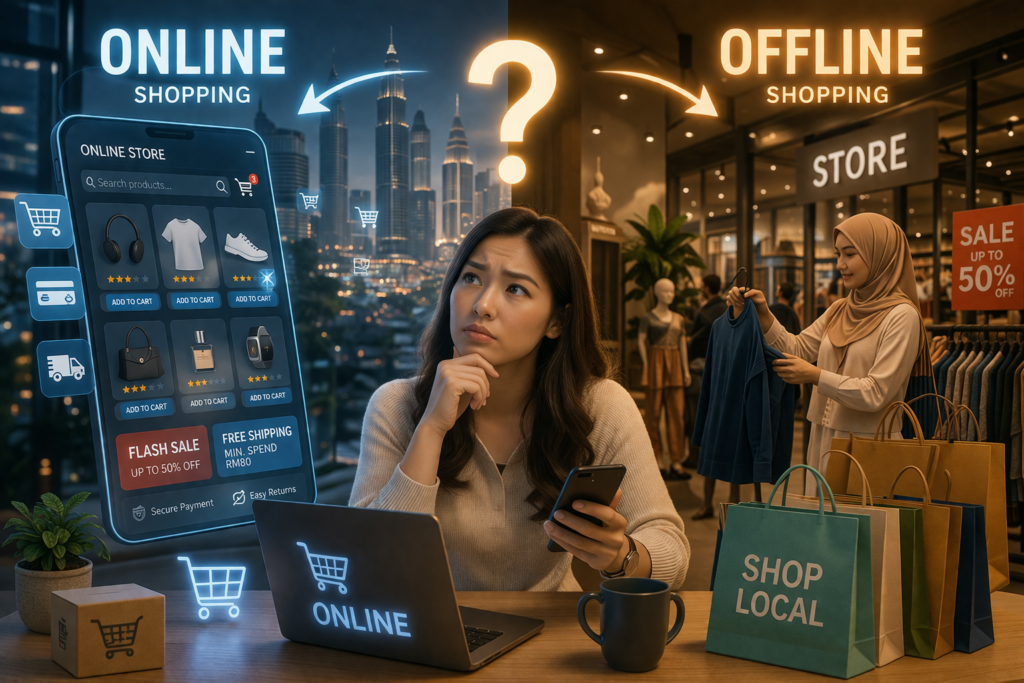
For many businesses, the question is often framed as a choice: should we focus on online or offline? In Malaysia, that distinction is becoming less useful. Consumers are no longer thinking in terms of channels; they move between online and offline depending on what is most convenient at each stage of their decision journey. Understanding how these behaviours interact is more important than choosing one over the other.
The Consumer Journey is Now Blended
Malaysian consumers rarely follow a straight path to purchase. Instead, their journey often involves discovering a product through social media, comparing options across multiple marketplaces, visiting a physical store to test the product, and finally completing the purchase either online or in-store. Even when a sale happens offline, it may have been influenced heavily by online exposure. Looking at channels in isolation leads to an incomplete understanding of what drives decisions.
Why Online Continues to Grow
Online shopping in Malaysia has expanded rapidly, driven by convenience and accessibility. Consumers are drawn to online platforms because they offer:
- Easy price comparison across multiple sellers
- Access to reviews and ratings
- A wider range of product options
- Time-saving and delivery convenience
For categories like electronics, fashion, and household items, online has become the default starting point. However, this has not replaced offline retail.
Why Physical Stores Still Matter
Despite the growth of e-commerce, physical retail continues to play an important role. Many consumers still prefer in-store experiences for seeing and touching products, immediate ownership without waiting for delivery, and greater confidence in quality. This is particularly true for higher-value purchases or products where fit and feel are important. Physical stores also serve as a point of reassurance, even when the final purchase happens online.
Different Categories, Different Behaviours
Shopping behaviour varies significantly by category:
- Groceries: Often remain more offline-driven, though online adoption is growing.
- Electronics: Tend to involve heavy online research, even if purchased in-store.
- Fashion: Sees a mix, with online discovery and offline trial still common.
Understanding category-specific behaviour is key to making the right strategic decisions.
Price, Promotions, and Trust
Perceived value plays a central role in decision-making across both channels. Malaysian consumers are highly responsive to discounts, promotions, and bundle deals. While online platforms make price comparison easier, physical stores rely on in-store promotions to remain competitive.
Trust also influences channel choice. Online platforms build trust through reviews and seller credibility, while offline stores build it through physical presence and direct interaction with staff. Consumers often move between both to reduce uncertainty before buying.
What This Means for Businesses
Online and offline should not be treated as separate strategies. Instead, the focus should be on how both channels work together. This includes:
- Ensuring consistent pricing and messaging across platforms
- Understanding where customers are researching versus purchasing
- Identifying points of friction in the overall journey
- Aligning promotions across both online and offline touchpoints
The Need for Ongoing Consumer Insights
Because behaviour is constantly evolving, tracking how consumers shift between channels over time helps businesses identify emerging trends early and adjust strategies based on real behaviour. In a market like Malaysia, digital adoption continues to grow, and these shifts can happen quickly.
Closing Thoughts
The question is no longer whether online will replace offline. In Malaysia, both channels are increasingly interconnected. Businesses that recognise this and adapt to the overall decision journey are better positioned to meet changing consumer expectations. Those that continue to treat channels separately risk missing how decisions are actually being made.
About Central Force International Sdn Bhd
Central Force International (CFI) is Malaysia’s leading homegrown market research agency, specialising in comprehensive data collection services since 1996. As a trusted partner and member to global organisations such as ESOMAR and WAPOR, we are dedicated to delivering high-quality, ethical, and impactful research insights. With in-house teams for data processing, quality control, and research, CFI ensures every project meets the highest standards of excellence. Guided by our core values—Ethics, Quality, Care—we empower clients with reliable data to drive informed decisions across diverse industries. Visit us at www.cforce-int.com to learn more.