
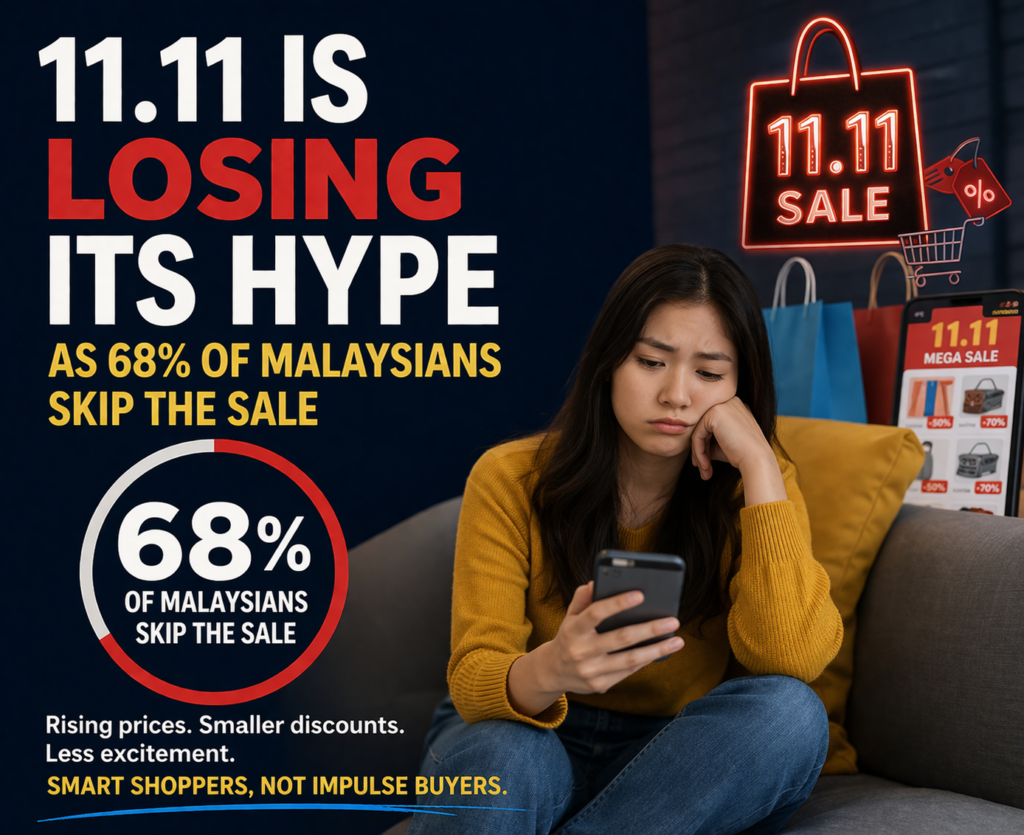
11.11 Is Losing Its Hype as 68% of Malaysians Skip the Sale
Dec
Central Force Releases Key Consumer Insights for 2026 Planning
Kuala Lumpur, 15 December 2025 —
This year’s 11.11 was marked by significant consumer apathy, conservative spending, and rapid platform disruption. Malaysians engaged only when promotions offered clear, relevant value, signaling a shift away from impulse-driven buys. As one of the world’s largest retail seasons, year-end shopping offers a clear preview of what consumers will prioritise in 2026, making it essential for businesses to understand which categories resonated, which stalled, and what these patterns reveal about evolving expectations.
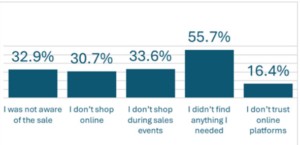
Figure 1: Analysis of non-participants showed that the primary barriers are soft with attitudinal hurdles, from Central Force International’s Survey Report “The True Impact of 11.11 Sales in Malaysia”
Central Force’s recent survey report, The True Impact of 11.11 Sales in Malaysia, provides a data-driven view of this shift. It found that 68% of Malaysians did not make a purchase during 11.11. For 55.7% of non-buyers, the principal reason was that they did not find offers relevant to their immediate needs, while roughly a third reported they were not aware of the sale at all.
In the report, Central Force underscored that “this is not just a marketing failure, but a fundamental issue of relevance.” Consumers are increasingly facing a marketplace saturated with promotions, and they engage only when offers align with practical needs and priorities, demonstrating the importance of clear, meaningful value in driving participation.
While participation in mega-sales has declined, this does not signal weakening engagement with e-commerce overall. For many households, online shopping has become habitual and routine across the year. At the same time, rising living costs and stretched household budgets force consumers to be selective, engaging only when the perceived value and relevance justify it. Therefore, mega-sale events like 11.11 no longer trigger automatic splurges.
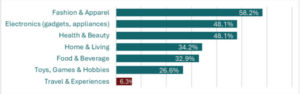
Figure 2: Consumer preference for utility and immediate savings, from Central Force International’s Survey Report “The True Impact of 11.11 Sales in Malaysia”
Categorical insights reinforce this trend. 11.11 purchases predominantly consisted of practical, lower-ticket items skewed toward essentials. Moreover, among those who did shop, spending was generally modest, with 82.5% limiting their expenditure to under RM500.
This indicates that consumers are using promotion periods as an opportunity to restock practical necessities rather than indulge in premium or bigger purchases, reinforcing the shift toward value-focused, strategic buying behaviour.
Consequently, businesses must design their strategy for mega-sale windows, as relying on high-volume or high-ticket sales is unsustainable without offering clear, immediate value to justify the purchase.
Platform dynamics are also evolving rapidly. While Shopee remains the most widely used platform with 79.7% of shoppers, TikTok Shop has emerged as a significant contender with 65.8% usage. This reflects a broader transformation in consumer behaviour, where content-driven experiences such as live selling and creator-led product demonstrations wield increasing influence.
Moreover, nearly half of all shoppers used more than one platform, usually pairing Shopee and TikTok, to compare deals and verify value. There is now a need to provide seamless commerce and a cohesive shopping experience across all channels, enabling consumers to navigate, compare, and ultimately capture conversions.
What This Means for Businesses Heading Into 2026
Understanding and delivering what is genuinely relevant to the consumer is now more important than ever.
As See Toh Wai Yu, CEO at Central Force International, says, “These insights are less a reflection of consumer disengagement and more a signal of shifting priorities. Malaysian consumers today are no longer shopping for the sake of shopping; they buy when promotions make sense, not merely when they promise savings.”
For SMEs in particular, these insights are instructive. Businesses can interpret this as a signal to focus campaigns on relevance, everyday essentials, and clear value, rather than relying solely on large-scale promotions to drive participation. Even smaller players can leverage social commerce, content-driven engagement, and straightforward messaging to capture attention and build trust.
Clear, transparent pricing and consistent experiences across whichever platforms they operate on are critical in a landscape where consumers are actively comparing deals and prioritising essentials.
Central Force International’s The True Impact of 11.11 Sales in Malaysia provides businesses with a data-driven roadmap for navigating the next retail cycle — essentials over extravagance, relevance over hype, value over volume, and consistency over platform fragmentation.
– END –
About Central Force International Sdn Bhd
Central Force International (CFI) is Malaysia’s leading homegrown market research agency, specialising in comprehensive data collection services since 1996. As a trusted partner and member to global organisations such as ESOMAR and WAPOR, we are dedicated to delivering high-quality, ethical, and impactful research insights. With in-house teams for data processing, quality control, and research, CFI ensures every project meets the highest standards of excellence. Guided by our core values—Ethics, Quality, Care—we empower clients with reliable data to drive informed decisions across diverse industries. Visit us at www.cforce-int.com to learn more.