
We Malaysians say the economy is slow and we are spending less. Yet we are buying more cars?
Jul
Because we boleh, and what Malaysians say and what Malaysians do can be two very different things.
So for once, stop complaining about the traffic jams, we kind of brought it upon ourselves too.
It’s almost August, a little over half the year has come and gone, and many organisations have entered the familiar dance that accompanies Q3, namely their related departments are looking for opportunities to spend what’s left of their allocated marketing budgets before year-end, driven by the very real “use it or lose it” approach or risk having that budget shrinking the following year.
Wake up from your fantasy…
The irony for most, is that budgets have already been reduced, postponed, or quietly redirected elsewhere in an organisation. You may be one of the lucky few, but all across the board, teams and departments are expected to deliver the same, if not better, results with fewer resources!
And for those lucky few who manage to spend every last Ringgit, they have no assurance next year’s allocation will remain untouched. Across boardrooms and budget meetings, the language has become remarkably similar: Do more with less. Prioritise efficiency. Demonstrate ROI. Justify every expense.
This caution isn’t merely anecdotal. The latest SME Sentiment Index recorded a historic low of 45.1 during the first half of this year, reflecting increasingly subdued business confidence among Malaysia’s micro, small, and medium enterprises. Only 40% of respondents expect sales to improve over the next six to twelve months, while optimism among micro and small enterprises falls further to just 38%. When business owners themselves begin tempering their expectations, it’s hardly surprising that marketing budgets become one of the first areas to face greater scrutiny.
Perhaps organisations and their departments are right to be cautious?
Today, in an age of information, consumers have more choices than ever before, industry competition continues to intensify, and geopolitical tensions, including the recent conflict involving Iran, have once again reminded businesses that supply chains remain vulnerable to events unfolding thousands of kilometres away. Inflation may have moderated compared with previous peaks, but few among the Rakyat would argue that everyday living has become noticeably cheaper (those who do, what planet are you from?). Whether it’s groceries, dining out, school expenses, entertainment, or household commitments, many families are paying closer attention to where their money goes.
So, it would be perfectly reasonable to assume that consumers are spending less, right?
Reality check. According to the Malaysian Automotive Association (MAA), Malaysians purchased 385,353 new vehicles during the first half of 2026. Read that number again. Nearly four hundred thousand new vehicles found new homes during a period where conversations about rising costs, affordability, and economic uncertainty seem to dominate both headlines and everyday conversations! Really, what’s up with that?
The answer is surprisingly simple, yet often overlooked. What we Malaysians, or rather, consumers say and what consumers ultimately do are not always the same thing.
That isn’t an accusation, nor does it suggest consumers are being dishonest. Human decision-making has never been a perfectly rational exercise. Ask any of our friends or family, and they will tell you stories of the dumbest things they have done with money (Writer of this article included).
We might tell ourselves we will postpone replacing the family car for another two years, only to discover that a new financing package suddenly makes ownership more affordable than expected. We might insist we are cutting back on discretionary spending until a growing family makes a larger SUV feel less like a luxury and more like a practical necessity. Sometimes the numbers make sense. Sometimes the emotions do. More often than not, purchasing decisions are shaped by a little of both.
This is precisely why consumer behaviour has fascinated researchers, psychologists, economists, and marketers (and banks!) for decades. Purchasing decisions oftentimes begin before someone steps into an automotive showroom. They are influenced by months of conversations, online research, family opinions, financial confidence, changing lifestyles, aspirations, government policies, promotional campaigns, peer pressure, and countless subtle moments that gradually shift someone from “just looking” to signing on the dotted line. Nowadays, we don’t even literally sign nor shake the hand of the showroom salesman, as much of the process is done digitally and outside the showroom!
Markets never change on their own. They take shape and evolve as people, priorities, and behaviours (and more often, the narrative) do.
Perhaps that explains why the automotive industry continues to reveal stories that aren’t immediately obvious from the headlines. While many Malaysians remain cautious about spending, they are also making deliberate decisions about where they believe their money delivers the greatest long-term value. For some households, that may mean replacing an ageing vehicle before maintenance costs begin outweighing monthly repayments. For another household, it could mean choosing an EV to reduce future fuel expenses. For others still, safety, reliability, or simply the confidence of owning a newer or cooler vehicle becomes reason enough to make the showroom purchase.
The broader market reflects these changing priorities. National brands accounted for approximately 67% of all new vehicle sales during the first half of 2026, demonstrating the continued strength of Malaysia’s home-grown manufacturers while leaving international brands competing for the remaining 33% of the market. At the same time, EV demand surged by more than 106% compared with the same period last year, while SUVs continued building on the strong momentum they established throughout 2025. However, not every segment shared the same fortunes, as MPVs and pick-up trucks experienced declining sales.
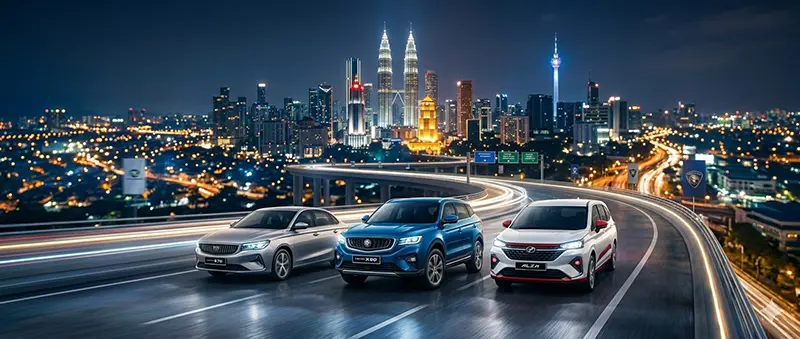
National brand resilience: Malaysian brands accounted for 67% of new vehicle sales in 1H 2026.
These figures are interesting, but they become far more valuable once we begin asking the questions hidden behind them.
Should automotive brands simply follow the fastest-growing segments because that’s where everyone else is heading? Does the decline in MPVs and pick-up trucks signal a shrinking market, or does it present an opportunity for brands willing to rethink how those vehicles are positioned? With national brands commanding two-thirds of the market, where exactly can international brands and manufacturers differentiate themselves beyond price alone? More importantly, what has changed in the lives of Malaysian consumers that explains these movements in the first place?
These are not questions that mere spreadsheets and reports answer particularly well.
Data is exceptionally good at telling us what happened yesterday. Sales reports, registration figures, market share analyses, and quarterly performance dashboards, conveniently pulled up by AI these days, all serve an important purpose, but they remain observations of events that have already taken place. They are yesterday’s news and rarely explain why those events unfolded as they did, or what might happen next if consumer attitudes continue evolving in the same direction, or even shift direction.
That distinction matters because marketing has never been about reacting to yesterday. Every campaign launched today is an investment in tomorrow’s potential customers! We make decisions today to create ripple effects (or hopefully big waves) in the months to come.
When budgets become tighter, every Ringgit carries greater expectations. Marketing managers can no longer afford to spread and scatter resources across channels in the hope that something resonates. Every campaign, every collaboration, every event, every digital ad, and every creative concept must work harder because there is simply less room for expensive guesswork.
This is where market intelligence becomes far more than another report sitting unread in someone’s inbox.
The teams and organisations making the most confident decisions are rarely those with the largest marketing budgets. How many times have we heard the term agility being thrown about? More often, the winners are the ones with the clearest understanding of their customers. They recognise that consumer behaviour is not static, and that assumptions made six months ago may already be outdated. They understand that the conversations and narratives of today, whether online, in dealerships, at family dinner tables, or over teh or kopi with friends, will shape the purchasing decisions of tomorrow.
For automotive brands, dealers, suppliers, financial institutions, and marketing teams, that difference can determine whether limited budgets are invested where they generate meaningful returns or quietly disappear into campaigns that no longer reflect the realities of today’s market.
Market Force: Dynamic Insights & Market Intelligence
At Central Force Insights, this philosophy shapes Market Force, our dynamic consumer insights and market intelligence service designed to help brands and businesses understand not only what is happening in the market, but why it is happening. Supported by experienced research analysts, audience analytics, and research fieldwork, Market Force transforms evolving consumer behaviour and industry developments into insights that are current, objective, and actionable, allowing brands and businesses to focus on what they do best while making better-informed decisions with greater confidence.
That is the role of dynamic market intelligence, and our role as an organisation: to move beyond surface-level statistics to understand the behaviours, motivations, and emerging trends influencing the market in real time. Instead of asking only what consumers bought, brands and businesses should also begin asking why they bought it, what nearly stopped them from buying it, what they are likely to do next, and how those answers should influence future strategy.
And here’s to a better and more effective marketing budget in the next fiscal year. Maybe we can help you justify every Ringgit well spent? Call us, and let’s chat.